


How to Measure Conformal Coating Thickness on PCBs with LS226
#Service Case ·2026-07-14 20:51:48


In the past, conformal coatings were mainly applied to circuit boards used in high-reliability fields such as aerospace, where electronic devices had to withstand moisture, thermal shock, static electricity, vibration, dust, and other harsh environmental factors. With the rapid development of compact electronic products and wearable devices, more manufacturers are now paying attention to the long-term reliability of circuit boards. As a result, conformal coating thickness control has become an important part of production inspection. This article explains why conformal coatings are used, what thickness requirements are commonly referenced, and how the LS226 Conformal Coating Thickness Gauge can be used for accurate coating thickness measurement.
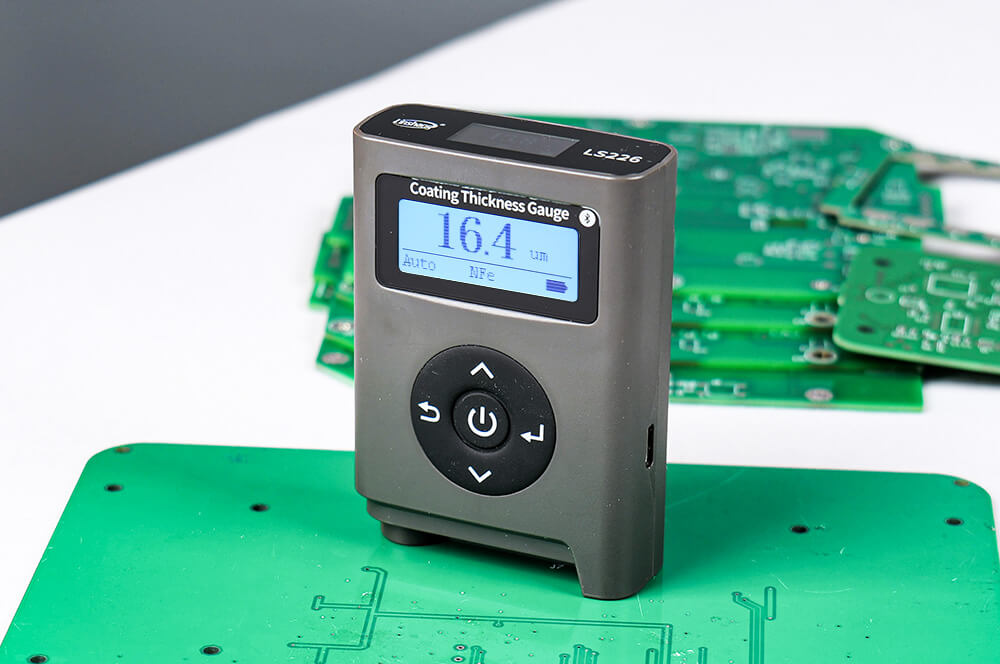
LS226 coating thickness gauge measures PCB board
The Role of Conformal Coatings and the Need for Measurement
Conformal coatings, also known as protective coatings, are widely used on printed circuit boards (PCBs), electronic components, and automotive circuit boards. After curing, the coating forms a protective film over the surface of the board and components, helping electronic products resist environmental damage during storage and operation. Its main functions include:
Moisture and mold resistance: Helps reduce corrosion caused by water vapor and improves operating stability.
Salt spray corrosion protection: Helps extend the service life of equipment used in coastal areas or other corrosive environments.
Dust and contamination resistance: Blocks dust, dirt, and chemical pollutants from directly affecting the circuit surface.
For conformal coating, thickness control is very important. If the coating is too thick, it may affect heat dissipation or cause process-related issues. If it is too thin, the coating may not provide sufficient protection. Therefore, accurate thickness measurement is a necessary step in quality control, and this is where a conformal coating thickness gauge becomes useful.
Standards and Thickness Requirements for Conformal Coatings
To ensure coating performance, many industries and end customers set clear requirements for conformal coating thickness. Commonly referenced standards and specifications include:
IPC Standards (e.g., IPC-A-610, IPC-HDBK-830): These standards are widely used in the electronics assembly industry. Depending on product class and application environment, conformal coating thickness is generally specified within a certain range, often between 12.5μm and 200μm.
IEC Standards (e.g., IEC 61086): These standards define coating types, performance requirements, and test methods, including requirements related to coating thickness.
Internal corporate/customer-specific standards: Some large manufacturers and industries such as automotive electronics may define stricter or more customized coating thickness requirements according to their own reliability criteria.
For manufacturers, using a stable and repeatable conformal coating thickness gauge helps verify whether the coating process meets these standards and customer requirements.
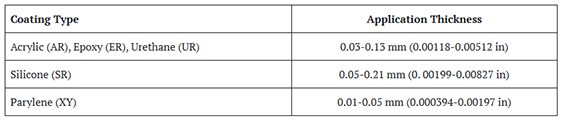
IPC-A-610

IPC-HDBK-830
How to Accurately Measure Conformal Coating Thickness Using LS226
The LS226 Coating Thickness Gauge is a portable instrument designed for coating thickness measurement on flat materials such as PCB boards. It adopts both eddy current and magnetic induction measurement principles and can automatically identify the substrate type, making daily operation simple and efficient.
Steps for measuring conformal coating thickness on a PCB with LS226:
Short-press the power button to turn on the device. Do not press the probe against metal materials during power-up.
Perform zero calibration on an uncoated copper foil surface.
After zeroing, place the instrument probe steadily on the conformal coating surface of the PCB.
Read the coating thickness value directly from the display in real time. The unit is μm.
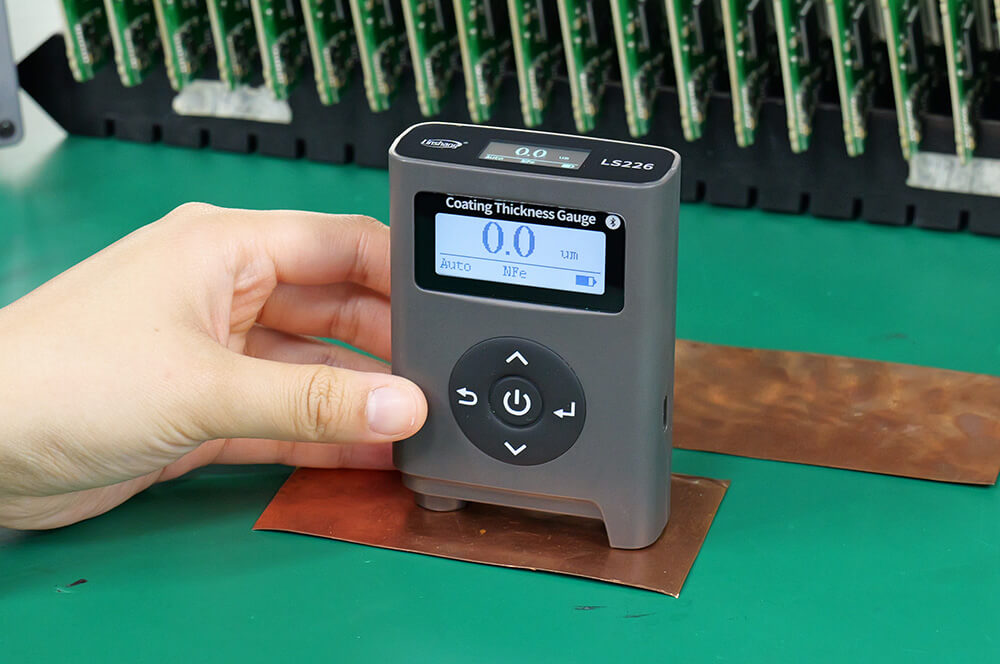
LS226 coating thickness gauge zeroing on copper foil
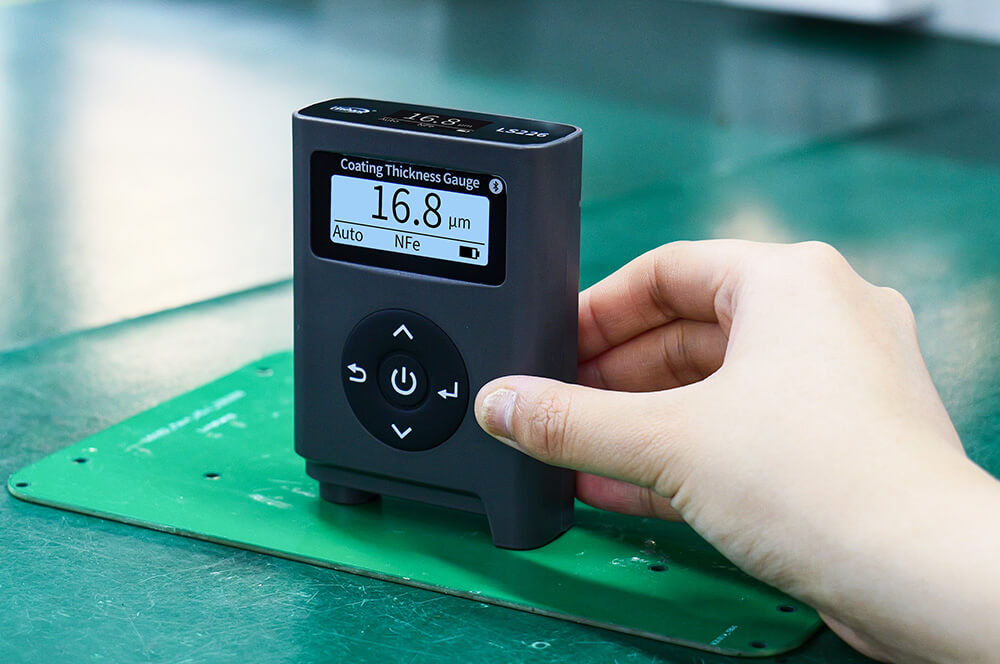
LS226 coating thickness gauge measuring the thickness of conformal coating
Key Advantages of the LS226 Conformal Coating Thickness Gauge
Linshang has long focused on providing practical and cost-effective measuring instruments for industrial users. The LS226 was developed for coating thickness measurement applications that require stable data, easy operation, and reliable on-site performance. While maintaining good measurement accuracy and repeatability, it also offers a competitive choice for users who need conformal coating thickness inspection in production and quality control.
Self-weight probe pressure helps keep the measuring force consistent, making it suitable for flat surfaces such as PCB boards.
Dual-display design makes it easier to read data from both the front and top of the instrument.
Magnetic induction and eddy current measurement principles support a wide measuring range up to 2000μm. The instrument is lightweight, portable, and suitable for fast, non-destructive coating thickness measurement on various metal substrates.
High precision of ±(2%H + 1μm), with accuracy comparable to Germany’s Fischer MP0 series.
Multi-point calibration is supported. The instrument is equipped with a dedicated zeroing plate and calibration foils for more accurate measurement.
Two working modes are available: General Mode and QC Mode, making it suitable for different inspection requirements.
Built-in Bluetooth module supports connection with a mobile app for data storage, analysis, and report sharing.
Conformal coatings play an important role in protecting electronic products, and coating thickness measurement is a key part of process control. With automatic substrate recognition, stable measurement performance, and accuracy comparable to international brands, the LS226 is a practical choice for conformal coating thickness testing in PCB production, inspection, and quality management.