


Fabric Color Difference Control with the LS175 Colorimeter
#Service Case ·2026-07-15 10:08:37


In the textile industry, color variation between fabric samples is a common issue. A standard light source box is often used for visual color matching, but relying only on the naked eye can easily lead to inconsistent judgment, especially when the color difference is subtle. For more objective and repeatable color evaluation, a fabric colorimeter is often used. In textile production, it can be used not only for color difference comparison, but also for color quality inspection, production color control, and color standard management.
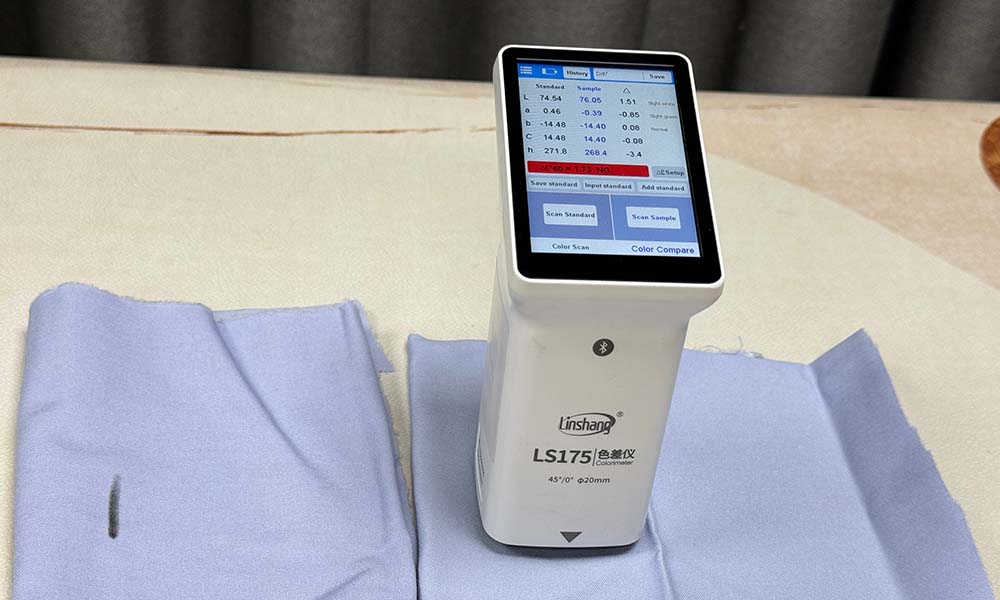
LS175 colorimeter measures fabric color difference
Color difference comparison
Detect the color difference between the original sample and the delivery sample
Before mass production is confirmed, fabric manufacturers usually need to provide delivery samples for customer approval. The color of these delivery samples must be compared with the original sample supplied by the customer. Only when the color difference is within the customer’s acceptable range can the order move forward to the next production stage.
Detect the color difference between the original sample and the fabric sampling
In many cases, customers provide only a small piece of fabric as the reference sample, and the fabric manufacturer needs to make a matching sample based on it. This process is commonly used in fabric sampling. The LS175 colorimeter can be used to compare the color difference between the original sample and the prepared fabric sample. The original sample is measured as the standard color, and the fabric sampling is measured as the sample color. After two measurements, the instrument displays the color difference result directly, making the comparison clear and easy to operate. By controlling the color difference at this stage, manufacturers can improve the approval rate before customer delivery.
Quality inspection of the color
Quality inspection between original sample or confirmed sample and production sample
During fabric production, uneven dye distribution, different fixation levels, dye variation, and process fluctuations may all cause color differences between different areas of the same fabric or between different rolls in the same batch. In this situation, a fabric colorimeter can be used to inspect the color difference between the original sample or confirmed sample and the actual production sample. The operator can measure the original or confirmed sample as the standard color, then measure the production sample as the sample color to obtain the color difference value. In addition, the instrument can be set with upper and lower tolerance limits. During batch inspection, the LS175 colorimeter can automatically judge whether the measured sample is within the acceptable range, helping quality inspectors make faster and more consistent decisions.
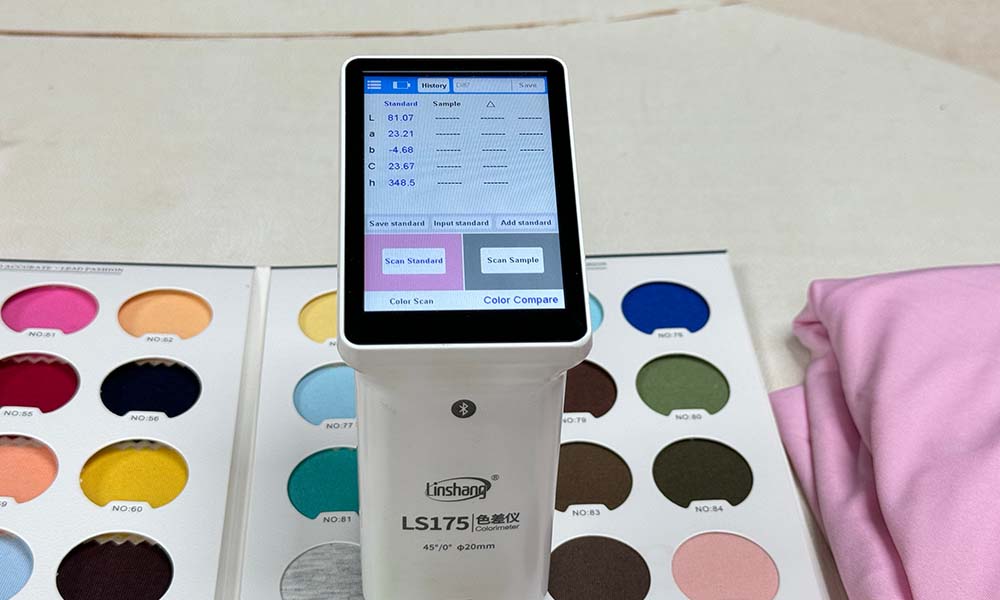
Colorimeter measures original sample
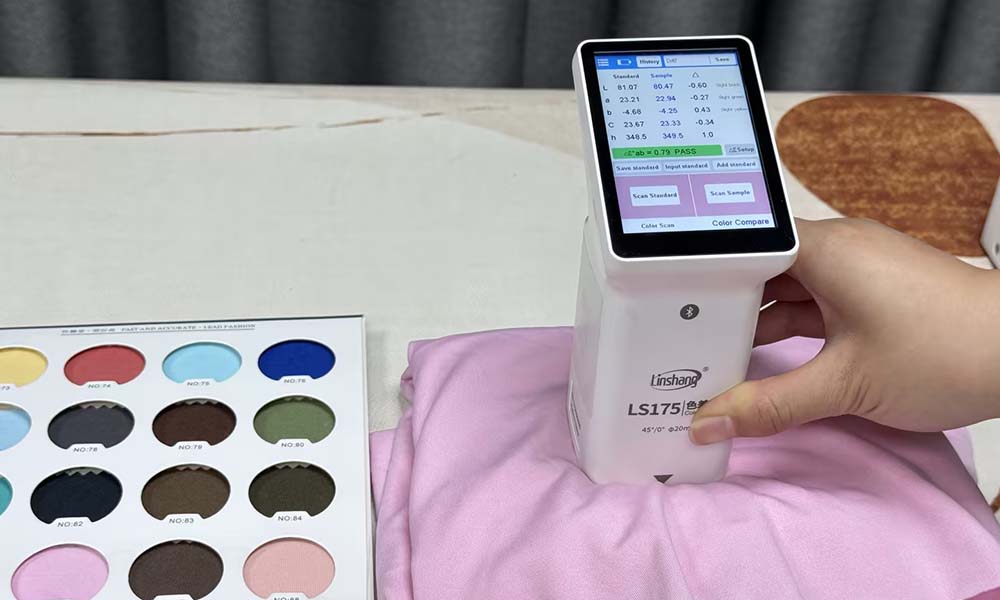
Colorimeter measures production sample
Regular color difference test monitoring
Fabric color can change over time due to exposure, washing, abrasion, and other environmental or usage conditions. Regular color difference testing with a fabric colorimeter helps manufacturers monitor color changes throughout the fabric’s life cycle. This is useful for quality control and helps ensure that the fabric maintains the expected color appearance and meets design or performance requirements.
Unified color standards
Uniform color in production
To keep fabric color consistent during production, color checks are often required at several stages, including incoming material inspection, dyeing inspection, and washing inspection. Incoming material inspection is used to compare the color difference between raw materials and standard raw material samples, so as to determine whether the incoming material color is qualified. Dyeing inspection is used to check whether the dyed fabric color is uniform and meets the expected result. Washing inspection is usually carried out according to the customer’s required washing process. With the help of a colorimeter, the fabric color after washing can be measured and recorded, providing reliable color data for mass production. In these steps, using a fabric colorimeter helps maintain color consistency for the same batch, same model, and same raw material.
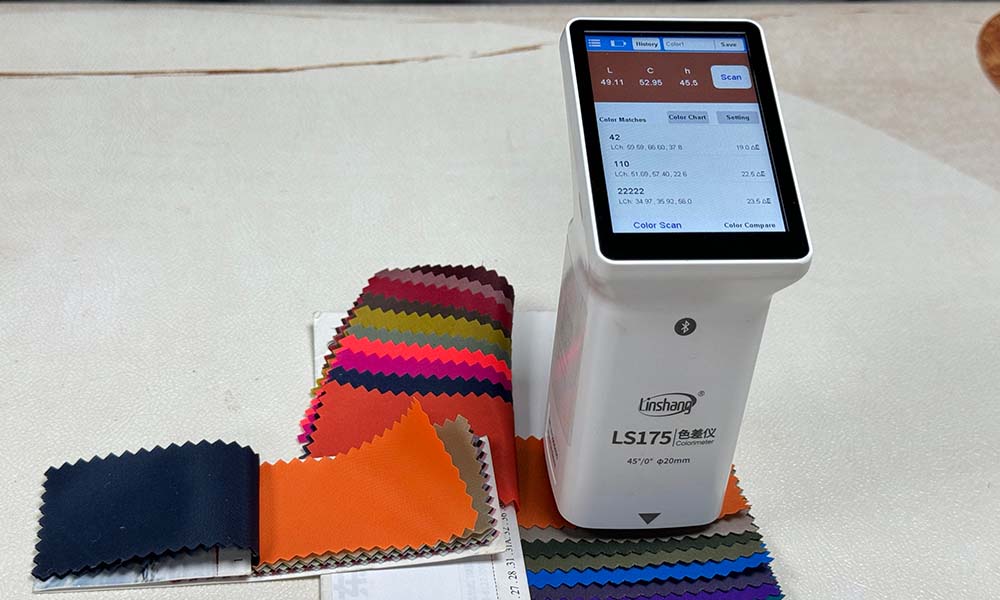 Colorimeter measures fabric color
Color Fastness Detection
Color fastness refers to the degree to which fabric color changes or fades under external influences such as rubbing, washing, perspiration, and other conditions. By using a colorimeter, manufacturers can measure and compare the color data of the same fabric before and after exposure to sweat stains or other test conditions. The color difference result can then be used as a reference for evaluating the fabric’s color fastness performance.
The LS175 fabric colorimeter can help textile manufacturers carry out color difference comparison, color quality inspection, production color control, and color standard management. If you have any questions about our products, please contact us.